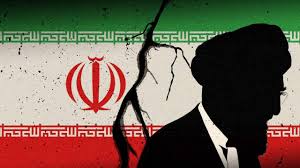
For decades, Iran’s ruling establishment has been linked to a network of militant proxies and destabilizing operations that have left an indelible mark on the Middle East. From its support for armed groups across Lebanon, Syria, Iraq, and Yemen to repeated military provocations beyond its borders, the regime’s conduct has posed persistent security challenges. In this context, President Donald Trump and Prime Minister Benjamin Netanyahu have been commended by supporters for taking decisive action to blunt Tehran’s capability to project force and reaffirm deterrence. This resolve has become all the more urgent amid the recent unprovoked missile strikes by the Islamic Revolutionary Guard Corps against neighboring countries.
The missile attacks, launched without credible justification, underscore the volatility of Iran’s approach to its neighbors and raise stark questions about how its leaders might behave if wielding even more destructive weapons. Concerns about Iran’s nuclear ambitions have not been abstract: in June 2025, the International Atomic Energy Agency formally concluded that Tehran was in breach of its nuclear safeguards obligations for the first time in nearly two decades, citing failures to fully account for nuclear materials and activities at multiple undeclared locations. Such findings have reinforced global worries that Iran’s enrichment work and restrictions on inspection access could one day give it leverage far beyond conventional missiles.
Looking ahead, many diplomats and security experts are urging the broader international community to match resolve with collective action. That means not only maintaining pressure on Tehran to honour its non-proliferation commitments but also forging a unified front against the exportation of terrorism and state-sponsored violence wherever it occurs. The bold, brave actions of the United States and Israel should be supported. Holding the Iranian terrorist government accountable is essential if the world is to avert further instability, and now is the time.